Powering the Human Battery: How the Citric Acid Cycle (Krebs Cycle) Drives Cellular Energy and What You Can Do When It Breaks Down
When Energy Isn’t There, Even After Eating Well
If you’re feeling exhausted after meals, sluggish throughout the day, or just not “plugged in” no matter how well you think you’re eating—you’re not alone. Real energy isn’t just about calories. It’s about your body’s ability to convert nutrients into usable fuel through a sophisticated, tightly regulated process known as the citric acid cycle (also called the Krebs cycle).
This article is for people who want to go deeper than surface-level tips about “eating for energy.” It’s for those who suspect their cellular engines are misfiring, and want a grounded, physiological explanation for why—and what they can do about it, naturally.
What Is the Citric Acid Cycle?
The citric acid cycle is a central metabolic pathway that takes the end products of carbohydrates, fats, and proteins and converts them into ATP (adenosine triphosphate)—the body’s main energy currency. This happens inside your mitochondria, the “power plants” of your cells.
If mitochondria are healthy, energy is abundant. If the cycle is slowed, disrupted, or starved of co-factors, energy plummets—even if you’re eating enough food.
Terrain Disruptors That Damage ATP Production
Even if you’re eating whole foods, several blocks can interfere with the energy cycle:
Missing enzyme co-factors (e.g., magnesium, B-complex, manganese)
Poor bile flow (limits fat-soluble nutrient absorption)
Impaired protein digestion (amino acids are needed for critical enzymes)
Chronic inflammation or infection (diverts ATP for defense, not energy)
Toxic exposure (e.g., pesticides, mold, heavy metals)
Low oxygen delivery (CDS users take note—this is your arena)
Deficiency of full-spectrum nutrients (not just isolated vitamins or minerals)
Each of these can “choke” the cycle, leaving intermediates stuck and ATP production limited. This is often why people feel exhausted even when bloodwork looks “normal.”
Krebs Cycle Nutrient Dependencies: Why Terrain Quality Matters
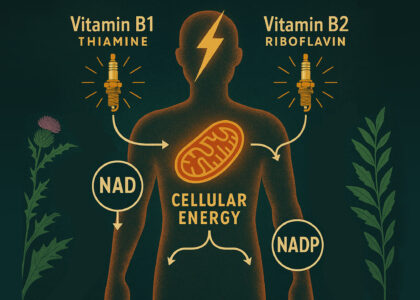
Let’s break this down clearly: The Krebs cycle runs on spark plugs—specific nutrients that fire enzymes at each step:
Magnesium — helps convert ADP to ATP
Vitamin B1 (Thiamine) — kickstarts pyruvate to acetyl-CoA
Vitamin B2/B3 (Riboflavin/Niacin) — co-factors for FADH/NADH generation
Alpha-lipoic acid — bridges glucose and mitochondrial entry
Iron — oxygen shuttle in the electron transport chain
Manganese and molybdenum — needed for urea and sulfur cycle coordination
Most supplements offer isolated versions of these nutrients that the body may struggle to absorb or integrate.
Why Wildcrafters Rejects the Isolate Model
We don’t believe in fragmented supplementation. Our energy-focused healing model includes:
Whole plant tinctures with roots, barks, and leaves rich in full-spectrum minerals and co-factors
Wild-sourced herbs grown without hybridization or chemical fertilizers
Animal-based nutrients (like grass-fed liver or bone extracts) when appropriate
You won’t find synthetic thiamine or lab-made “energy blends” here. Instead, we focus on delivering complex nourishment that works in synergy with your terrain.
Symptoms of Terrain-Level Energy Disruption
If your energy pathways are compromised, you may experience:
Fatigue after meals
Dizziness when standing
Brain fog or difficulty concentrating
Cold hands and feet despite normal thyroid labs
Muscle weakness or slow recovery
Exercise intolerance
Cravings for sugar, salt, or caffeine
These are not willpower problems. They’re signals that your cellular battery isn’t charging properly.
Simple Steps to Rebuild the Energy System
Rebuild oxygen delivery and redox balance. Learn about CDS (chlorine dioxide solution) and how it helps oxygenate terrain and eliminate acids (see our CDS eBook).
Support mitochondrial co-factors. Use Wildcrafters’ whole plant tinctures high in magnesium, bioavailable B-complex, and mineral complexes—not isolates.
Eat terrain-approved fats and proteins. Think grass-fed meats, eggs, and wild fatty fish—these supply the raw material for ATP generation.
Bitters for bile. Our wild bitter tinctures help restore bile flow, supporting fat-soluble vitamin absorption.
Address toxins and parasites. See our ebook on parasites and pollutants to explore hidden energy stealers.
When you feed the terrain, the terrain feeds your energy.
Wildcrafters Product Tip
Try our Bioelectrical Energy Support Kit (coming soon): a trio of wild tinctures crafted to support oxygen, minerals, and mitochondrial fire.
Oxygenating CDS drops
Wild Mineral Complex Tincture
Bitter Root Bile & Liver Support
Learn more in our downloadable Wild Nutrient eBook or listen to the audio versions for terrain education on the go.
Conclusion: Feed the Terrain, Fire the Engine
You don’t need caffeine or synthetic pre-workouts. You need to fix the terrain, supply the co-factors, and allow the Krebs cycle to run clean. Energy isn’t about more fuel—it’s about a clean engine and the right spark.
ATP is built in oxygen-rich, mineral-dense environments. And that’s exactly what Wildcrafters was built to support.
Disclaimer: All information provided on this website and by its authors or associates is intended for informational, educational, and entertainment purposes only. This content does not constitute medical advice, diagnosis, or treatment and is not a substitute for consultation with a qualified healthcare provider. Always do your own research and consult a medical professional before beginning any new health regimen.