Why Some Bodies Can’t Convert Beta-Carotene to Retinol: The Role of Thyroid, Bile, and Zinc
When Orange Foods Aren’t Giving You the Vitamin A You Need
You’re eating your carrots, sweet potatoes, squash, even juicing greens—but your skin is dry, your night vision is poor, you feel vulnerable to infections, or just… off. You might assume you’re getting plenty of Vitamin A, but the truth is: you may not be converting beta-carotene to retinol—and your body knows it.
This article is for those who are doing everything “right” nutritionally but still feel under-nourished. The problem isn’t just about missing a vitamin—it’s about missing the activation, and more importantly, missing the quality and complexity of nourishment needed to heal terrain.
Beta-Carotene Is Not Vitamin A
Beta-carotene is often labeled as “Vitamin A” on nutrition labels, but this is a dangerous oversimplification. Beta-carotene is a precursor—a compound the body must convert into usable retinol.
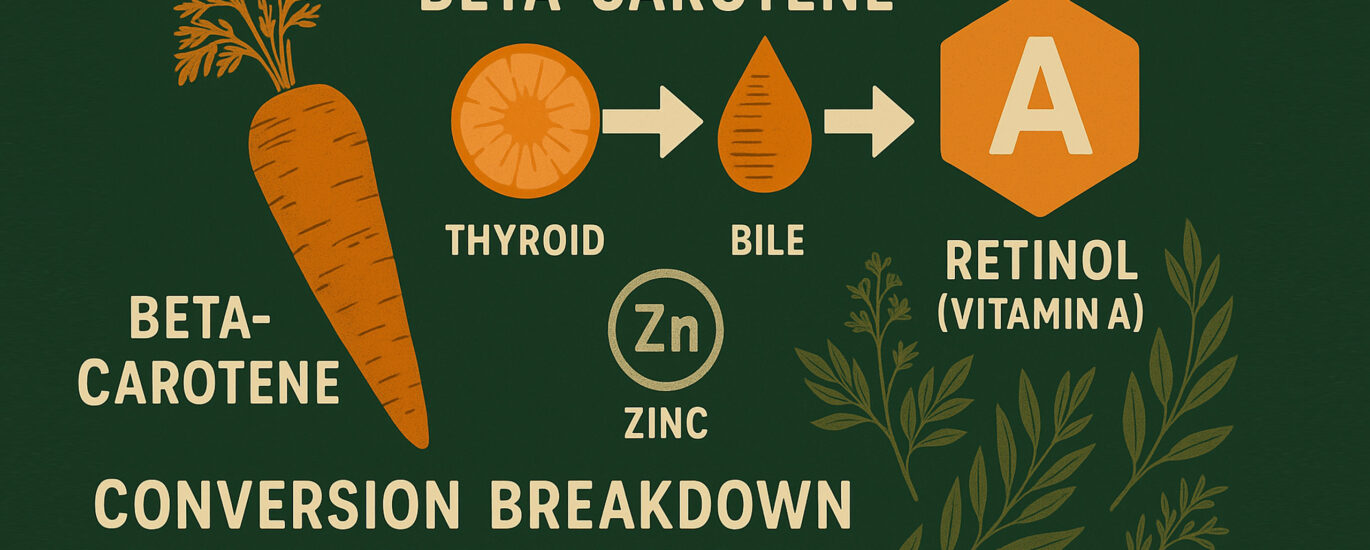
That conversion doesn’t always happen. In fact, it’s estimated that up to 45% of people may have impaired beta-carotene to retinol conversion due to sluggish thyroid activity, impaired bile flow, or mineral deficiencies—especially zinc.
But the deeper issue is this: even if conversion were possible, most modern food is not grown in a way that produces nutrient-dense beta-carotene to begin with.
The Wildcrafters View: Terrain First, Quality Over Quantity
At Wildcrafters, we don’t believe in chasing isolated supplements or single-nutrient fixes. We support whole-system, terrain-based restoration, using:
Wild or naturally grown plants that haven’t been hybridized for sweetness over potency
Animal foods that come from animals raised on their biologically intended diets, with no antibiotics, hormones, or processed feed
Tinctures made from whole-plant complexes, retaining co-factors, enzymes, and molecular signals that the body recognizes
The problem is not just that your body “can’t convert” beta-carotene. The real problem is that most food is too depleted to activate your physiology, and your terrain is too burdened to process what’s left.
Why Conversion Breaks Down: Not Just Enzymes—It’s Terrain
Yes, conversion of beta-carotene into retinol requires:
Healthy thyroid function to activate conversion enzymes
Good bile flow to emulsify fat-soluble compounds
Zinc-rich terrain to co-activate the pathway
But these systems don’t fail in isolation. They degrade together in response to:
Chemically farmed foods with poor mineral content
High-sugar hybrid vegetables bred for taste, not nutrition
Lack of bitter compounds to stimulate bile
Processed salt, poor fat quality, and missing animal-based activators
The deeper truth: if your food doesn’t support terrain, conversion won’t happen.
Symptoms of True Retinol Deficiency (Even If You Eat Beta-Carotene)
Persistent keratin buildup on arms or legs (aka ‘chicken skin’)
Slow wound healing, poor scar formation
Decreased tolerance to infections or recurring colds
Dry, easily irritated eyes
Light sensitivity or difficulty adjusting from light to dark
Loss of taste/smell over time
Poor skin barrier leading to acne, eczema, or chronic irritation
Fertility issues or irregular cycles
You can eat all the vegetables in the world and still suffer from these if your terrain is not primed—and your foods not wildly grown or full-spectrum nourished.
What’s the Real Solution? Quality Over Volume. Complexity Over Isolation.
You don’t need megadoses of synthetic Vitamin A or a list of isolated supplements. You need:
Grass-fed animal products like liver, egg yolks, or butter from cows that eat grass—not grains. These contain preformed retinol, not beta-carotene.
Wild plant complexes with bitter compounds to stimulate bile flow and liver activity
Whole food mineral sources, especially those high in zinc and cofactors, delivered in plant-aligned formats like wildcrafted tinctures
A commitment to terrain quality: not just what you eat, but how it was grown, harvested, and prepared
When your food is chemically clean, mineral-rich, and biologically aligned, your body stops craving more. It doesn’t need “more”—it needs real.
The Wildcrafters Standard: Food Grown for Human Repair, Not Shelf Appeal
Our model is simple:
No chemical fertilizers or pesticides
No genetically modified or hybridized seed stock bred for sugar
No antibiotics, hormones, or grain-based animal feed
Plants grown for nutrient density, not weight or yield
We aren’t just rebuilding health. We’re reviving the biological vocabulary the body uses to regenerate.
Final Thoughts: Retinol Isn’t Just a Nutrient—It’s a Signal
Retinol doesn’t just nourish you—it tells your body what to do. It signals epithelial repair, immune calibration, reproductive readiness, and neurological protection. If you don’t convert beta-carotene, or you’re relying on weak food grown in depleted soils, you’re not just undernourished. You’re mis-signaled.
Rebuild terrain. Trust complexity. Choose real.
Disclaimer: All information provided on this website and by its authors or associates is intended for informational, educational, and entertainment purposes only. This content does not constitute medical advice, diagnosis, or treatment and is not a substitute for consultation with a qualified healthcare provider. Always do your own research and consult a medical professional before beginning any new health regimen.