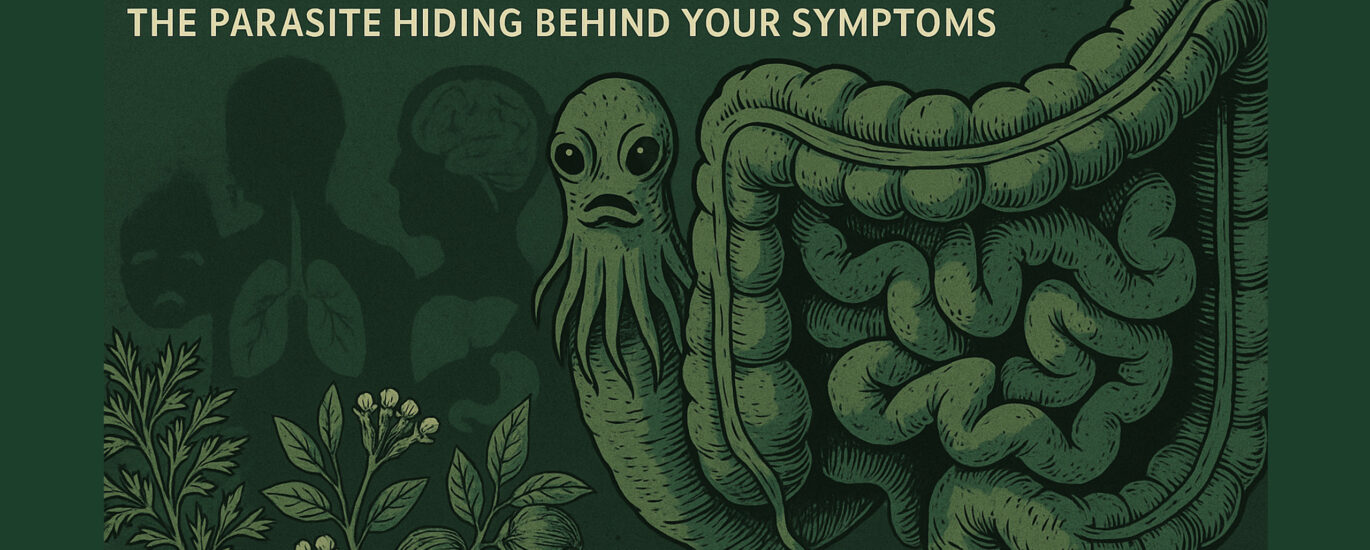
Excerpt from the upcoming book: WILD VITAL TRILOGY - Book 2 - The Hidden Menace: Parasitic Infestations.
Most people in developed countries assume they’re safe from parasites — that infestations are something that only happen “over there.” But that assumption is not just wrong — it’s dangerous. In reality, parasitic infections are vastly underdiagnosed in first-world countries, often hiding in plain sight behind common symptoms that are misattributed to other conditions.
This book is different from others on the subject. It doesn’t just skim the surface. It dives deep into:
- Over 90 specific parasitic species that commonly affect people, even in countries like the U.S., Canada, Australia, and the U.K.
- Misdiagnosed symptom profiles that lead sufferers down the wrong medical path.
- Full life cycles of each parasite, including intermediate hosts and environmental risks.
- Scientific documentation and natural protocols that target each parasite’s vulnerabilities using accessible herbs like wormwood, cloves, and black walnut hull.
- What conventional medicine would do—if it tested for the actual cause.
Case Study: Blastocystis hominis — The IBS Mimicker
The Misdiagnosis
If you’ve been told you have Irritable Bowel Syndrome (IBS), chances are, no one tested you for Blastocystis hominis — even though studies show that it’s one of the most prevalent protozoa in the world, infecting an estimated 23–60% of people globally, including those in industrialized countries.
Most U.S. doctors don’t look for it. When symptoms like:
- Chronic bloating
- Abdominal pain
- Diarrhea alternating with constipation
- Brain fog
- Skin issues
- Fatigue
…are present, they’re usually written off as “IBS,” “leaky gut,” or stress-related — and treatment typically includes:
- Antispasmodics
- Fiber supplements
- SSRIs for “gut-directed anxiety”
- Probiotics (which may aggravate some cases)
But if Blastocystis is the cause? These measures don’t fix the problem — they mask it.
The Life Cycle
Blastocystis hominis is transmitted via the fecal-oral route, meaning:
- Contaminated water (even “clean” city water)
- Raw produce
- Undercooked meat
- Poor hand hygiene after handling pets or soil
Once ingested, cysts excyst in the small and large intestines, releasing active forms (trophozoites) that multiply rapidly and disrupt the microbiome — triggering inflammation, permeability, and neurological cross-talk (gut-brain axis).
The parasite has a knack for evading detection:
- It often hides in biofilms
- It can be intermittently shed, so a single stool test might miss it
- It may not show up on conventional ova and parasite (O&P) exams
What Your Doctor Might Miss
Conventional medicine rarely acknowledges Blastocystis as pathogenic, labeling it “harmless” — despite growing evidence to the contrary. If they tested for it and properly diagnosed it, the standard treatment would likely be:
- Antiprotozoal drugs like metronidazole, tinidazole, or nitazoxanide
- Sometimes antifungals or antibiotics if co-infections are suspected
However, many strains of Blastocystis are resistant to standard medications, and some patients actually worsen with pharma-based protocols.
What Natural Medicine Knows — And Science Is Catching Up To
Documented natural approaches have shown excellent results in managing